
10. March 2026
What's your pie?
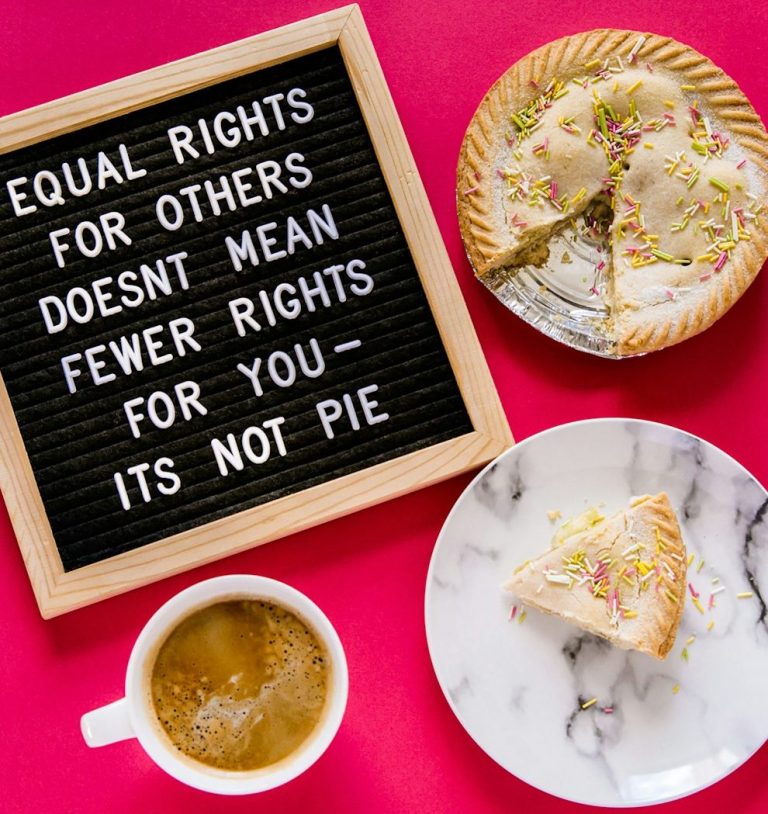
When we first set up our website we chose an image with the text, “Equal rights for others doesn’t mean fewer rights for you - it’s not pie.” I know how we feel about this in relation to our mission and values: we want to challenge the narrative that feminism deprives boys and men of role and identity in the family or wider social context. This misrepresentation is the foundation of the increasingly loud and prevalent discourse of the manosphere. It reminds me of Paulo Freire’s assertion - often quoted but rarely credited - that for those “conditioned by the experience of oppressing others, any situation other than their former seems to them like oppression.”
It is critical that we address this. Of course we need to consider the feelings of isolation and loneliness that many young men experience, and their implication in the current wave of severe mental ill health. But as Bridget Christie pointed out in her recent critique of the acclaimed show Adolescence, we miss the point by focusing on how violence against women and girls affects men. Or by falling for what Kate Mann calls “himpathy”; narratives that encourage us to feel sorry for antisocial or violent men (see the attempted defence of Brock Turner as a startling example). Framing gender equality as disadvantaging boys and young men creates the perfect space for advocates of the pie deficit. It’s not enough to try and convince young men that they had have the same pie they always had, because they don’t. We need an ideological shift that calls out the values underpinning the manosphere. We need to offer a tastier pie.
It is hardly surprising that the messages served up in the manosphere appeal to people who believe that feminism is out to deprive them. It’s a tempting menu: lifestyle goals centred on superficial status, material wealth, flashy cars and expensive clothes along with the main ingredient, authority over women. To be clear, the men promoting this as ‘masculinity’ are doing so to acquire material wealth, flashy cars and expensive clothes through advertising and endorsements. They’re serving themselves by convincing other men that this is what they’re entitled to. Those of us with the wisdom of experience - let's call us 'Sages' - know that the dopamine hit from sense of superiority or a Bugatti is neither true power nor contentment, so how do we convince our youth of this?
We can learn (and teach) a lot from longitudinal research studies at Stanford and Harvard. These studies, which track participants over their life courses, consistently find that connection, love and trust are the most important factors in lifelong health and happiness. The Harvard Study of Adult Development also demonstrates that regardless of generation, many young people - especially young men - are preoccupied with dreams of material wealth. They insist that this is what will bring them happiness, only to find as they mature that love and friendship are their most valuable assets.
Every generation thinks they’re different: the young men who signed up for the Harvard Study in 1938 thought they knew better than their parents what made for a successful life. Our children and young people need to see evidence that positive relationships - in friendship and romance - are where happiness and success flourish. And to perceive that as true power.
We know it will take skill and conviction to challenge such pervasive and persuasive narratives. The work needs to be responsive and sustained to effect culture change, and to show our young people that rejecting a slice of manosphere pie means you can fill up on far better options!
ST